A One-Stop Shop For All Your Printing, Signage, and Indoor & Outdoor Advertising Needs

A One-Stop Shop For All Your Printing, Signage, and Indoor & Outdoor Advertising Needs

Cost-Effective Solutions Using State-of-the-Art Technology Tailored To Your Needs and Budget

Cost-Effective Solutions Using State-of-the-Art Technology Tailored To Your Needs and Budget

Commitment To Quality And Customer Satisfaction

Commitment To Quality And Customer Satisfaction

Your Business Is Always Our Business! Contact Us To Request A FREE, No-Obligation Quote!

Your Business Is Always Our Business! Contact Us To Request A FREE, No-Obligation Quote!

About Printixels™

We Print To Impress, One Pixel At A Time.

  • PRINTIXELS ENTERPRISE www.printixels.com
  • Printixels is a full-service printing company based in Carmona, Cavite, Philippines providing a range of services and products to a variety of clients operating across different industry sectors in the provinces of Cavite, Laguna, Batangas, and Metro Manila.

    We specialize in commercial digital printing services, large format / tarpaulin printing, panaflex and acrylic signage making and design, built up fabrication and installation, laser cutting and engraving, sticker label printing, indoor and outdoor advertising collaterals, display standees, banners, decal and sticker cutting, customized gifts, corporate giveaways, and many others. As a one-stop shop for all your printing, signage, and advertising requirements, our customized solutions are tailored to your specific needs, ensuring the best results every time – from planning and design process to production and installation.

    Here at Printixels, we believe in creating top-notch value for our clients who deserve only the highest quality of products and services. Our company prides itself on professionalism and a commitment to excellent customer service, making us a premier firm for all your printing, sign, and advertising needs in Cavite, Laguna, and beyond. We boast of an experienced team of professionals and a range of state-of-the-art equipment that allow us to give you best possible output in every project that we undertake.

    The goals of our clients are always our top priority. We seek to exceed client expectations by providing diligence and attention to detail in all aspects of production. We understand that delivering nothing but quality finished products and services will lead to a long-term business relationship. To strengthen customer satisfaction and loyalty, we constantly communicate and consult with you throughout the entire project, anticipate and solve problems, and follow deadlines and guidelines.

    When you hire us, you will have a “partner” who you can rely on. As an expert signage maker and printing company in Cavite, our reputation is built on the successful delivery of all projects, no matter how difficult the assignment or how tight the timeframe, so you can relax knowing your project is in the safest of hands. We will collaborate with you to fully understand your goals and to provide you with the best possible results using the topmost specifications tailored to your budget.

    Read more...

    .

    .

    Our Expertise

    With a diverse selection of products and services at your disposal, Printixels has got you covered! We can make your creative vision and customization ideas a reality!

    Using the latest technology in the printing, laser cutting, engraving, and signmaking industry, we handle your projects from start to finish with outstanding level of professionalism and integrity. Our experienced staff members are dedicated to delivering what you need, on time and within budget, every step of the way.

    Below is a list of products and services that we provide. To learn more about what we can do for you, Contact Us today!

  • Digital PrintingServices
  • Photo PrintingServices
  • SublimationShirts, Lanyards, Mugs, Etc.
  • SignagesPanaflex, Acrylic, Backlit
  • BannersRoll Up, X-Banners
  • TarpaulinWhite, Mesh, Reflective
  • StickersVinyl, Matte, Glossy, Satin Paper
  • StandeesLife-Size Sintra Board
  • Labels, Tags Printing
  • GiveawaysGifts, Souvenirs
  • Safety SignsPhotoluminescent / Glow in the Dark
  • Laser CuttingAcrylic
  • What's New!

    Standard Sizes of Signage in the Philippines

    Printixels Enterprise
    Standard Sizes of Signage in the Philippines

    From towering billboards to humble street markers, signage plays a critical role in commerce, public information, safety, and navigation in the Philippines.

    However, this proliferation necessitates regulation, and central to this is the concept of standardized sizes. While a single, nationwide, universally applied standard for all types of signage remains an evolving ideal, various laws, ordinances, and implementing guidelines at national and local levels collectively establish a framework for appropriate dimensions.

    The Rationale Behind Standardization

    The primary drivers for standardizing sign sizes are multi-faceted: 

    Public Safety and Order: Oversized or improperly placed signs can obstruct views, distract drivers, pose structural hazards, or impede pedestrian flow. Standards mitigate these risks.

    Urban Aesthetics and Visual Clutter: Unregulated signage can lead to visual chaos, diminishing the beauty and character of cities. Size limits contribute to a more organized and aesthetically pleasing environment.
    Readability and Information Clarity: Signs must be appropriately sized for their viewing distance to effectively convey information. Standards ensure legibility without being overwhelmingly large or too small.

    Fair Competition: Standard sizes can help level the playing field for businesses, preventing a "size war" where larger budgets dictate visual dominance.

    Environmental Concerns: Larger signs often require more materials and energy, impacting environmental sustainability.

    Disaster Resilience: In a country prone to typhoons, structural integrity and size limits prevent signs from becoming dangerous projectiles.

    Key Regulatory Bodies and Laws

    In the Philippines, the regulation of signage sizes is a shared responsibility, primarily between:Local Government Units (LGUs): Cities and municipalities, empowered by the Local Government Code of 1991 (Republic Act No. 7160), are the primary enforcers and creators of ordinances governing most commercial and building-mounted signs within their jurisdiction. These ordinances often include specific dimensions, setbacks, height limits, and even material specifications.

    Department of Public Works and Highways (DPWH): For national roads and highways, the DPWH sets standards for traffic signs, warning signs, and directional signs, often adhering to international best practices like the Manual on Uniform Traffic Control Devices (MUTCD) principles.

    Housing and Land Use Regulatory Board (HLURB), now Department of Human Settlements and Urban Development (DHSUD): While not directly setting sign sizes, their land use planning and zoning regulations indirectly influence permissible sign dimensions and locations.

    Department of Labor and Employment (DOLE): For safety and warning signs within workplaces, specific Occupational Safety and Health Standards (OSHS) may dictate size, color, and placement for maximum visibility and effectiveness.


    Types of Signage and Their Sizing Principles

    Understanding the "standard sizes" in the Philippines requires breaking down signage into general categories:

    1. Commercial and Business Signage (Building-Mounted, Freestanding, Billboards)

    This category is largely governed by LGU ordinances, leading to variations from city to city. However, general principles and common maximums emerge:Building-Mounted Signs (Façade Signs):Principle: Often restricted as a percentage of the building's façade area where the business is located. Common limits range from 20% to 30% of the total wall area where the sign is installed.

    Specifics: Some ordinances may specify a maximum height (e.g., not exceeding the parapet wall or roofline) or a maximum projection from the wall (e.g., 30cm to 60cm for blade signs). The letters and logos themselves must be proportionate to the sign area.

    Freestanding Signs (Pylon Signs, Monument Signs):Principle: Regulated by height, setback from property lines, and sometimes total area.

    Specifics: Height limits vary significantly based on zoning (commercial vs. residential, main thoroughfare vs. side street). Common maximums can range from 6 meters to 12 meters above ground level. Setbacks from property lines or road right-of-way are typically mandated (e.g., 3 to 6 meters), ensuring they don't obstruct sidewalks or traffic.

    Billboards and Off-Premise Advertising Signs: This is the most heavily regulated and contentious category.Principle: Designed to control visual pollution, structural integrity, and public safety.
    Specifics: While a uniform national standard for all billboards is elusive, there have been attempts. Many LGUs limit the display area of a single billboard face to 60 square meters (approx. 20ft x 30ft), with some stricter areas (e.g., Makati, certain heritage zones) imposing limits as low as 40 square meters.
    Height: Max height limits are crucial, often ranging from 12 meters to 18 meters from ground level, depending on the LGU and whether it's a single or double-face billboard.

    Number & Spacing: Ordinances also regulate the minimum clear distance between billboards (e.g., 50 to 100 meters) and the maximum number of faces allowed on a single structure. The Metro Manila Development Authority (MMDA) has issued regulations, like Ordinance No. 2009-009, attempting to harmonize these, but enforcement and varying LGU interpretations remain challenges.

    2. Traffic and Road Signage (DPWH Standards)

    These signs adhere to more uniform standards, often drawing from international conventions to ensure clarity and immediate recognition for drivers. While specific dimensions vary based on the type of sign and its intended viewing distance, the principles are consistent across the country for national roads.Types: Regulatory signs (e.g., "STOP," "NO PARKING"), Warning Signs (e.g., "Sharp Curve," "Pedestrian Crossing"), Guide/Informational Signs (e.g., "Directional arrows," "Town names").

    Principle: Size is determined by legibility requirements at varying speeds and distances. Larger signs are used on expressways, while smaller ones suffice on local streets.

    Standards: The DPWH Manual on Uniform Traffic Control Devices (MUTCD) for the Philippines provides detailed specifications for shapes (e.g., octagon for stop, triangle for yield, diamond for warning), colors (e.g., red for stop/prohibitive, yellow for warning, green for directional), symbols, fonts, and minimum sizes for various applications. For instance, a typical "STOP" sign usually has an edge-to-edge dimension of 750mm (30 inches) for standard roads, increasing for higher speed roads.

    3. Public and Government Signage

    This includes signs for public buildings, parks, evacuation centers, or historical markers. While less stringently standardized by national law for their dimensions, they generally follow principles of:Readability and Accessibility: Sizes are chosen to be easily readable by pedestrians and visitors.
    Proportionality: They are sized to be proportionate to the structure or area they refer to.
    Consistency: Government agencies often implement internal guidelines for consistent branding and information dissemination across their facilities.

    4. Safety and Warning Signage (Workplace)

    Governed by DOLE's Occupational Safety and Health Standards (OSHS), these signs are crucial for preventing accidents.Principle: Must be highly visible, durable, and universally understandable.
    Specifics: OSHS guidelines specify minimum font sizes, color codes (e.g., red for danger, yellow for caution, green for safe condition), and symbol usage. While absolute dimensions aren't always prescribed for every single sign, the legibility distance and a minimum size to achieve this are implied. For example, a safety sign visible from 5 meters might require a letter height of at least 25mm.


    Challenges and Nuances in Enforcement

    Despite the existing frameworks, achieving universal adherence to signage size standards in the Philippines faces several challenges:

    LGU Discrepancies: The primary challenge is the lack of a single, unified national code for all commercial signage. What's permissible in Quezon City might differ significantly from Makati or Cebu City. This creates confusion for businesses operating across multiple jurisdictions.

    Weak Enforcement: While ordinances exist, consistent enforcement can be lax, leading to a proliferation of oversized or non-compliant signs, especially in rapidly developing areas.
    Informal Economy: The vast informal sector often operates outside these regulations, contributing to visual clutter.

    Technological Advancements: The rise of LED screens and digital billboards introduces new parameters for regulation, such as brightness, refresh rates, and static vs. dynamic content, which older ordinances may not adequately address.

    Political Will: Enforcement often requires strong political will, especially when dealing with large advertising companies or influential businesses.

    Conclusion

    The "Standard Sizes of Signage in the Philippines" is not a monolithic concept but rather a dynamic interplay of national principles, localized ordinances, and industry best practices. While the DPWH provides more consistent standards for traffic signs, commercial signage sizes are largely dictated by the specific LGU, leading to a mosaic of regulations across the archipelago. 

    The ongoing effort to standardize aims to balance commercial interests with the imperative for public safety, urban aesthetics, and environmental responsibility, moving towards a more orderly and visually harmonious Philippine urban landscape. Continued dialogue between national agencies, LGUs, businesses, and the public is vital to refine and robustly implement these crucial standards.

    Related Product:

    Acrylic Desk Name Plates

    Printixels Enterprise
    Acrylic Desk Name Plates Philippines

    Elevate your office aesthetic and let your name shine with the clarity and brilliance it deserves with our customized acrylic desk name plates. 

    Here at Printixels, our premium laser-cut acrylic desk name plates offer a sophisticated, modern alternative to traditional wooden blocks, providing a sleek and crystal-clear aesthetic that commands respect and exudes confidence. Whether you are a newly promoted executive, a dedicated government official, or an entrepreneur building your brand, our personalized acrylic desk name plates are the perfect reflection of your professionalism.

    Our personalized name plates are manufactured using high quality acrylic, known for its superior optical clarity that rivals glass without the fragility. Unlike cheap plastics that yellow over time, our acrylic remains glass-clear for years. Each piece is precision-cut using state-of-the-art laser cutting technology, ensuring perfectly straight edges and rounded corners for a polished, safe finish.

    We believe that no two professionals are the same, which is why we offer a wide array of customization options tailored to our diverse clients in the Philippines. Using high-end digital printing technology, we can print and cut your name, designation, and company logo in vibrant, high-definition color on vinyl.


    Key Specifications of Our Acrylic Desk Name Plates:

     Laser-cut to precision
     Can be customized to desired shapes and sizes
     Durable and long-lasting
     Sleek and modern design elements

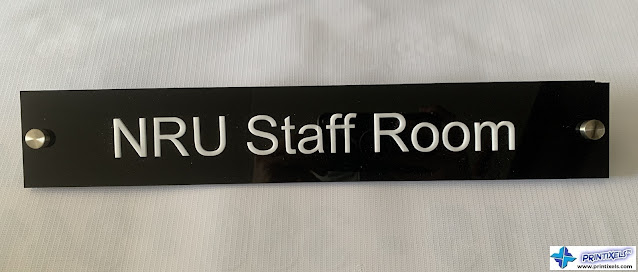
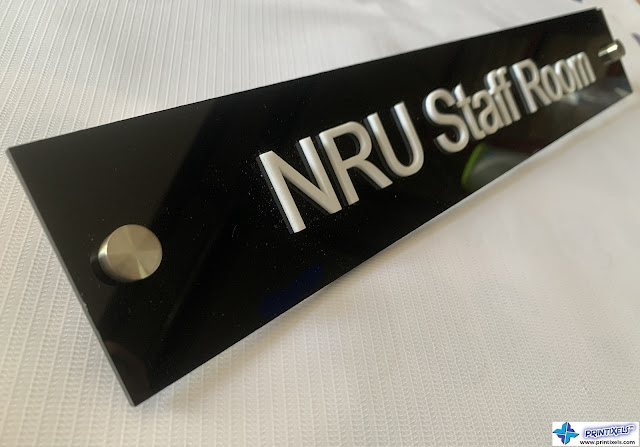
    Acrylic Name Plates - Bureau of Internal Revenue ONETT Team Acrylic Table Name Plates Acrylic Desk Name Plates

    Nowadays, the Philippine market is flooded with generic office supplies, but we stand out by prioritizing quality and reliability. Furthermore, we know that time is money. So whether you are in Metro Manila, Cavite, Laguna, Batangas, or anywhere in the Philippines, we offer one of the most cost-effective custom acrylic products and quickest production leads in the industry. From the moment your design is finalized, our team works efficiently to get your acrylic desk name plate to your doorstep via trusted local couriers.

    We also specialize in bulk orders, offering competitive tiered pricing without compromising the individual quality of a single piece. Our bespoke laser-cut acrylic products are built to withstand the humid Philippine climate. They can last for a long time, making them a one-time investment for your career journey.

    Our company believes that a desk name plate is more than just a piece of signage; it is a statement of identity and achievement. By choosing our premium acrylic desk name plates, you are investing in a product that reflects the hard work and excellence you bring to your profession every day. Order yours today and experience the difference of premium Filipino craftsmanship.

    Filipino Safety Signages You Need To Know About

    Printixels Enterprise
    Filipino Safety Signages You Need To Know About

    In the Philippines, safety signages are an everyday visual cue that help keep the public, workers, and commuters safe across a wide range of environments—from bustling city streets and busy construction sites to schools, hospitals, and shopping malls.

    Governed primarily by the Department of Labor and Employment (DOLE) and the Department of Public Works and Highways (DPWH), Filipino safety signs follow internationally‑recognized colour codes but are often rendered in a bilingual format (English and Tagalog) to reach a linguistically diverse audience.

    Colour and Symbolism

    Red still signals prohibition or immediate danger (e.g., “Bawal Pumasok – No Entry”), while yellow warns of cautionary hazards such as wet floors or low‑lying wires. Green denotes safety or a safe route, as seen on “Ligtas na Daan – Safe Passage” signs leading to emergency exits. Blue marks mandatory actions, like “Magtakip ng Guantes – Wear Gloves.” 

    The universal pictograms—triangles for warnings, circles for mandatory actions, and squares for information—are heavily used because they communicate effectively even to those who cannot read the text.

    Typical Settings and Examples - Common Signage Typical Text (Eng/Tag)

    Roads & Traffic: Bawal Magparada – No Parking”, “Magbigay Daan – Yield”, “Tulay para sa mga Takbuhan – Pedestrian Crossing”

    Construction Sites: “Saklaw ng Helmet – Hard Hat Area”, “Panganib: Bumabagsak na Basura – Danger: Falling Debris”

    Industrial/Workplaces: “Pindutin para Ihinto – Emergency Stop”, “Labasan sa Sunog – Fire Exit”, “Estasyon ng Unang Tulong – First‑Aid Station”

    Public Buildings: “Bawal Manigarilyo – No Smoking”, “Panatilihing Nakasara ang Pinto – Keep Door Closed”, “Madulas na Lupa – Wet Floor”

    Health & Hygiene: “Hugasan ang Kamay – Hand Wash”, “Magsuot ng Mask – Wear Mask”, “Igalang ang Distansya – Social Distancing”

    Filipino / Tagalog Safety Signs

    Cultural Nuances

    Because many Filipinos speak primarily Tagalog or regional dialects, signage designers often place the Tagalog translation above or beside the English phrase, ensuring immediate comprehension. Moreover, icons depicting familiar local elements—such as a jeepney for “Public Transport” or a coconut tree for “Tropical Climate” warnings (e.g., “Bantayan ang Malakas na Hangin – Beware of Strong Winds”)—enhance relevance and recall.

    Legal Backbone and Enforcement

    The Occupational Safety and Health Standards (OSHS) require employers to post hazard‑related signs in visible locations, while the Republic Act No. 10930 (the “Road Safety” law) mandates consistent traffic signage nationwide. Non‑compliance may result in fines or work stoppages, which has spurred a steady improvement in sign quality and placement over the past decade.

    Why Safety Signage Still Matters

    Even with the rise of digital alerts, physical safety signs remain indispensable in the Philippines due to variable internet connectivity, the prevalence of informal settlements, and the high foot‑traffic nature of many public spaces. Their simple, colour‑coded design, combined with bilingual text and universally understood symbols, provides an immediate, low‑tech layer of protection that saves lives, prevents accidents, and promotes a culture of safety across the archipelago.

    Related Product:
    Customized Filipino / Tagalog Safety Signs

    Our Equipment

    Investing in the latest printing equipment and technologies is paramount to the success of Printixels' operation.

    Our state-of-the-art facilities are operated by a team of highly dedicated staff members whose combined years of experience, expertise, and training make them among the best in the industry. They are knowledgeable in traditional and advanced printing technologies and are always prepared to meet the needs and expectations of our clients.

    Read more...

    .

    .

    Our Staff

    At Printixels, we believe that no level of technology can match human ability and creativity. That’s why we employ only the most competent staff to be part of our team. Nothing matches the pride we have in all of our staff!

    Guided by key philosophies, “Your Business Is Always Our Business” and "We Print To Impress, One Pixel At A Time", our employees are committed to providing excellent customer service. When you hire us to accomplish a project, we are confident that you will find this to be 100% accurate.

    Read more...